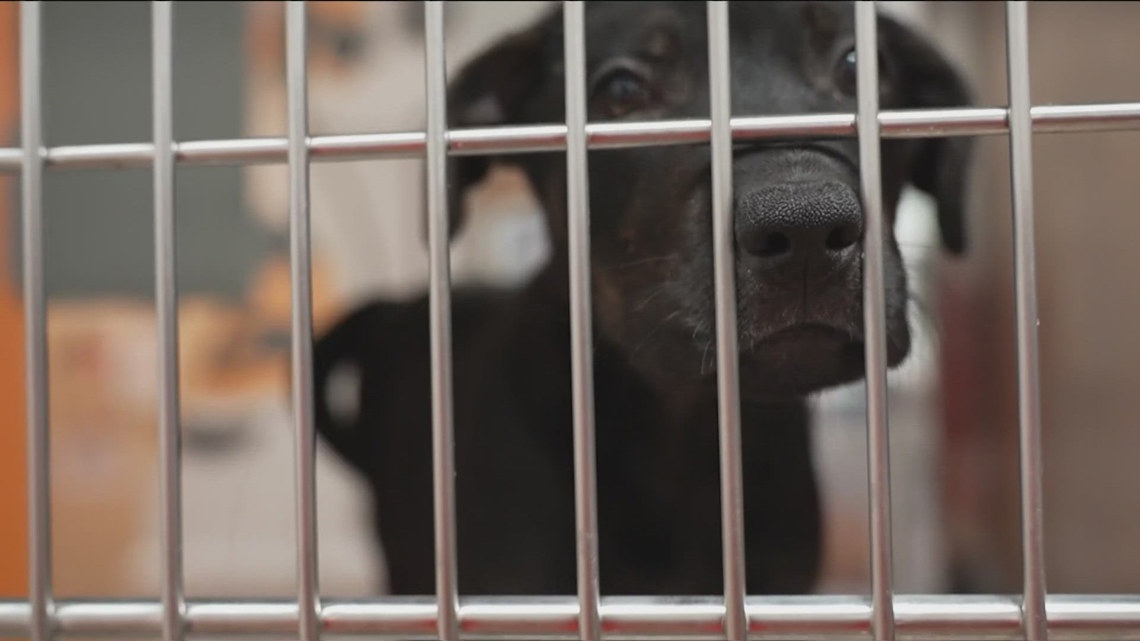
Supporters say the bill will curb animal abuse and make it harder for puppy and kitten mills to operate. Opponents say the bill won’t accomplish what advocates hope.
AUSTIN, Texas — The Texas House of Representatives is slated to consider a bill on Tuesday that would ban the sale of dogs and cats at most pet stores in Texas.
House Bill 3458 by State Rep. Jared Patterson (R-Frisco) is an attempt to disrupt what advocates call the “puppy mill pipeline” into Texas.
“This bill is to protect both the animals who are involved, but also Texas consumers,” Francesca Chillino, a government relations assistant for the Texas Humane Legislation Network, said.
Chillino said the legislation is needed to prevent animal abuse and make it harder for dog and cat mill breeders to operate in the state. These places breed animals commercially to maximize profit, often sacrificing the animal’s health and well-being.
“They are coming in sick and born into really unfortunate conditions a lot of the time,” Chillino said. “In their transport, they often get infected with things like Giardia and even parvo, some potentially fatal conditions. And then they’re being sold to the public.”
It can lead to families unknowingly purchasing unhealthy animals.
“These people are paying exorbitant prices for these animals and then very often getting stuck with really high medical bills, sometimes several thousands of dollars, tens of thousands of dollars,” Chillino said.
The bill would allow pet stores to showcase animals that are available for adoption from an animal shelter or rescue organization but forbids them from receiving fees for doing so.
Opponents argue it will force pet stores that are doing things the right way to close and give families who want to add a pet fewer options.
“It restricts consumer choice and removes consumer protections, and it does nothing to address bad actors in the pet space or help shelter animals,” Ashley Brinkman, the government affairs director with the Pet Advocacy Network, said. “The bill doesn’t solve a single problem, but it will have horrible consequences for animal welfare.”
During committee hearings on the bills, much of the testimony and criticism focused on Petland, a retail pet chain with eight locations across the state. Several people expressed concern with how animals were treated and how the retail chain obtained its dogs and cats.
“This is a death sentence to the 30-plus small, family-owned brick-and-mortar pet businesses across the state who can only compete with large pet retailer chains and online sellers because of their ability to provide healthy, happy pets from quality sources,” Brinkman said. “This bill would devastate every single one of these small businesses currently thriving.”
The bill imposes a civil penalty of up to $500 for each violation of a dog or cat offered for sale or sold. Each sale or offer is a separate violation. It gives the Texas Attorney General’s Office the power to enforce those violations through either civil penalties or an injunction in court.
“For Texas consumers, this is a pretty good step forward, a major improvement,” Chillino said. “Puppy mills will still continue to operate and source and provide their animals to other states, so that is definitely a continued issue, but as far as Texas goes, this will be a major improvement.”
Brinkman said that after California passed similar legislation in 2019, the Better Business Bureau reported a 350% increase in puppy scams.
“Not one puppy mill was closed in California after they banned the retail sale of dogs. They are flourishing, and that’s because the California state government eliminated their main competition,” Brinkman said. “To eliminate folks that are trying to be responsible and ethical and bring folks healthy, happy pets in a physical brick-and-mortar store location, to eliminate those folks will drive people immediately to the internet to get what they want.”
Chillino said she is not concerned about people increasingly turning to the black market, partly because it already exists.
“This would not be creating any kind of black market that isn’t already in play right now, but also, we can’t control everywhere somebody sources an animal from,” Chillino said. “We would hope people would turn to their local responsible breeders, but if they did choose to instead go through an online route to obtain their cats and dogs, at least in that case, they’re not having a salesperson pushing them to make an impulse purchase.”
Brinkman said pet retailers in Texas are already required to be transparent with consumers about where a puppy comes from.
“They’re required to divulge what breeder that they source the dog from and where they are, and that includes whether they’re a USDA-licensed breeder, whether they have an additional certification with the American Kennel Club, or anything else that goes above and beyond the requirements,” Brinkman said.
It is something that the bill’s supporters dispute.
“These pet stores cannot see what’s going on all of the time in the places they’re sourcing these puppies from. The USDA standards that most of these places say they meet are not very high,” Chillino said. “They’re standards are just to keep those animals surviving, but they are not humane conditions.”
Eighteen cities, including Austin, San Antonio and Houston, have ordinances regulating retail sales of cats and dogs at pet stores within their city limits.
In 2023, a bill that would have imposed statewide regulations on pet stores died in the Texas Legislature, though lawmakers did adopt a law preventing cities from adopting regulatory ordinances. It did not block those already on the books, but did prevent other cities from taking similar action.
“They are just moving right outside city lines and reopening their businesses just a couple of miles down the road from where they originally were, because they can no longer be put in place,” Chillino said.
Chillino said the goal is not to shut down stores but to develop a statewide standard.
“These stores can continue to thrive if they can just shift their business model to an ethical model protecting both their consumers and the animals,” she said.
Brinkman said they are all for boosting transparency and honesty for pet stores, but this proposal, which they say punishes the good actors, goes too far.
“We want those consumer protections to be readily available for any consumer looking to purchase a pet to bring home to their family, and transparency and honesty in that process is something that we can legislate and add requirements – and to make sure that people feel confident and comfortable that their pets are coming from a good place, from a quality place,” Brinkman said.
“We would like to have those bad actors punished as well,” Brinkman added. “But you don’t punish people doing the right thing, who are going above and beyond the legal requirements that provide thousands of Texas families with pets each year.”
If the lower chamber passes the bill, lawmakers must take one more vote before it can go over to the Senate for consideration.
link

More Stories
Sweet Gray Cat Abandoned at Petco Making Biscuits in His Carrier Has People Emotional
Proposed city ordinance would ban sale of dogs, cats in pet stores
Breaking: In major blow to puppy mills, New York ends the sale of puppies in pet stores