
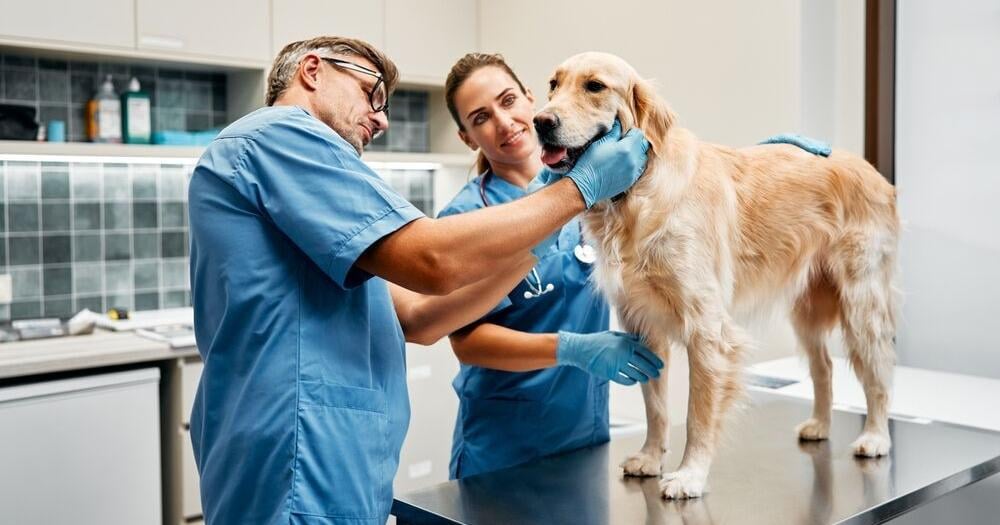
Opponents say Proposition 129 is a sham proposal that will not help the animals it claims to serve. Proponents, including Gov. Jared Polis, counter that it will fill a crucial void in the state’s veterinary care services with added economic benefits.
Proposition 129 aims to create a new state-regulated veterinary professional associate (VPA) in veterinary medicine. The measure would also outline the minimum education and qualifications required to become a VPA.
In explaining the bill, Polis said animals are served by a vet technician, a low-level assistant, and a certified veterinarian. Proposition 129 would create the VPA position to fill a gap between them. That means a larger workforce and higher-paying jobs in the industry, Polis said.
“This initiative, Prop. 129, would make something that we’ve learned from human medicine to be,” he said. “It’ll be a physician assistant. So, we have these kind of mid-level veterinary professionals who’s able to do, you know, the basic work under the supervision of a veterinarian.”
State Rep. Karen McCormick, a veterinarian, called the bill “disheartening,” stressing that while it might sound like a good idea on the surface, it is misleading because it will not accomplish what is promised.
In the human world, a physician’s assistant or nurse practitioner provides medical care under the direction of the acting physician. Proponents of Proposition 129 say a VPA will be similar in the animal world.
However, McCormick said a human PA can prescribe medication, while the U.S. Food and Drug Administration would not allow a VPA to do the same, meaning that during surgery or in providing basic care, the newly created professional would not be able to administer medication legally.
“That should be a huge red flag,” she said. “That means that diagnosing and prescribing are inextricably linked to each other. You’re really handicapped in a way if you’re not able to prescribe. Or, if you’re in the middle of surgery and that animal needs something right now to help their blood pressure, respiratory rate, or heart rate, if a VPA says to a technician, ‘I need 10 milligrams of this IV right now,’ they would be breaking the law.”
Ali Mickelson, the senior director of advocacy and education for the Dumb Friends League, said this is an area where she and McCormick disagree. Mickelson and Apryl Steele, the president and CEO of the Dumb Friends League, led the campaign to collect enough signatures for Proposition 129 to qualify for the ballot.
Mickelson said a VPA will be able to practice veterinary medicine under the guidance of a licensed veterinarian.
“We have gone round on round on this,” Mickelson said. “We really have different interpretations on the FDA regulations around prescribing. If the supervising veterinarian doesn’t believe that the FDA allows that professional to prescribe, then they don’t have to delegate that, and that isn’t something they need to do.”
McCormick, a Democratic lawmaker from Longmont, said she tried unsuccessfully to get an amendment in the state’s 2024 State Ballot Information Booklet, otherwise known as the blue book, that would stress that a VPA’s capabilities are limited and accreditation would be questionable.
When the medical industry created nurse practitioner and physician assistant positions, Polis said, the same arguments were made about putting patients at risk. The two-term governor stressed that this did not happen and that the new positions had helped the medical industry.
Polis said VPA training would come through an online master’s degree in veterinary clinical care program at Colorado State University. The goal is to graduate the first VPA class in 2027.
While CSU stands to benefit from the added tuition, McCormick said, the problem is that veterinary programs must receive accreditation from the National Veterinary Accreditation Program. Currently, the CSU program is not accredited, she said.
In an email statement, Dr. Sandra Faeh, president of the American Veterinary Association, said her group is “strongly opposed to ballot proposition 129 because it puts the health and wellbeing of animals at risk.”
She said the proposition would create a new midlevel practitioner but whose training would be “mostly online with minimal hands-on instruction.”
“Proposition 129 would allow VPAs to practice veterinary medicine, including performing surgery after insufficient training,” she said. “Additionally, there is currently no accreditation, national exam, or licensure to ensure VPAs deliver safe and effective care for animals. As an experienced veterinarian, I can tell you there is no such thing as a ‘simple’ surgery — even ‘routine’ procedures can become complicated. We urge Coloradans to vote ‘no’ on Proposition 129.”
Rejecting that a VPA would put animals at risk, Polis said passing Proposition 129 would fill a veterinary care void in Colorado, especially in the rural communities.
Data from 2023 shows that about 3,800 vets in Colorado treat 2.5 million dogs and cats per year, not including horses and farm animals. In 2023, a survey of Colorado veterinarians by Colorado State University found that 71% of veterinarians said they were turning animals in need of treatment away weekly.
Mickelson said clinics hosted by the Dumb Friends League are always full, and pet owners even surrender their animals because they cannot afford or find proper care.
“We know that one in three people face barriers to access in veterinary care,” she said. “And that 20% of Colorado counties have little to no access to veterinary care.”
While she is not disputing a need, McCormick said lawmakers acted during the 2024 legislative session to pass two bills that Polis signed into law.
House Bill 1047 allows veterinary technicians to take on additional tasks under either the direct or indirect supervision of a licensed veterinarian, creating a path forward for veterinarians to utilize techs and increasing pay and job satisfaction.
The second bill passed in 2024 was House Bill 1048, which created a legal path for veterinarians to conduct telehealth visits. The bill was passed following FDA guidelines.
McCormick said passing the two pieces of legislation was a “huge” step in addressing the veterinarian staff shortages. She added that it was done through a summer-long program that included weekly meetings, research, and debate.
“We worked really hard with our organization in Colorado that represents the registered vet techs and the veterinary technician specialist,” McCormick said. “So, everything we learned that summer is that there’s such a thing as a veterinary technician specialist, which is a high level, higher trained, higher credential Vet Tech, and fulfills many of the goals.”
Given the success in passing the new legislation, McCormick said she is disappointed Proposition 129 was pushed forward.
Mickelson said the Dumb Friends League supported HB 1047, noting it addresses an issue where vet techs, on average, leave the industry after five years. However, she said it did not go far enough and Proposition 129 takes another step forward.
The committee called All Pets Deserve Pet Care has received more than $1.2 million in contributions to support Proposition 129. The Dumb Friends League has contributed $1 million to the cause.
The opposition committee, Keep Our Pets Safe, has reported more than $1.9 million in contributions. The largest donor is the American Veterinary Medical Association at $850,000.
Proposition 129 is opposed by:
• American Association of Bovine Practitioners
• American Association of Equine Practitioners
• American Associations of Swine Veterinarians
• American Association of Veterinary State Boards
• American Veterinary Dental College
• Colorado Veterinary Medical Association
• Independent Veterinary Practitioners Association
• Littleton Equine Center
• Pike’s Peak Veterinary Clinic
• The American Veterinary Medical Association
• Veterinary Management Groups
Proposition 129 is supported by:
• Animal Policy Group
• Colorado Voters for Animals
• Dumb Friends League
• Independence Institute
• The Interfaith Alliance of Colorado
• Thrive pet Healthcare
• Virtual Veterinary Care Association
link


More Stories
Animal Lovers League to leave premises by Feb, other groups to take over its 160 animals
Nuclear imaging groups share new flurpiridaz guideline
Only Two Groups Have Submitted Signatures for 2026 Ballot Initiatives. They Aim at Very Different Issues.