
Tosa
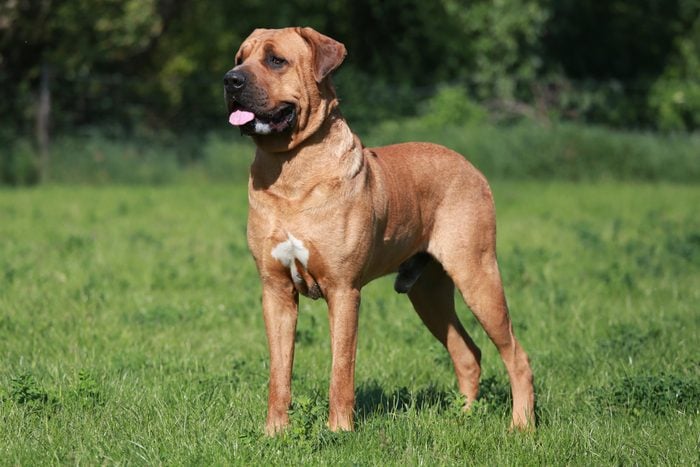
Meet the Tosa, one of the biggest dog breeds from Japan. These animals were formerly bred for fighting, but thankfully, those days are gone. Now, the Tosa basks in the family life. It’s far from a lazy dog breed, though. It takes its role as the stately and vigilant guardian of the family seriously. A properly trained and socialized Tosa is calm and affectionate with its family but naturally suspicious and aloof with strangers.
Remember, the breed was created for dogfighting, so your Tosa might not take too kindly to other animals or humans visiting your home. “They will show increased predator/prey behavior with cats and other small pets and may readily chase small children running around with possibly disastrous consequences due to their strength and large size,” says Dr. Bell. In other words, Tosas prefer to be your one and only pet, and it pays to properly train them, especially if you have young kids.
| Breed overview | |
| Height: | 12.5 to 23.5 inches at the shoulder |
| Weight: | 100 to 200 pounds |
| Life expectancy: | 10 to 12 years |
Tibetan mastiff
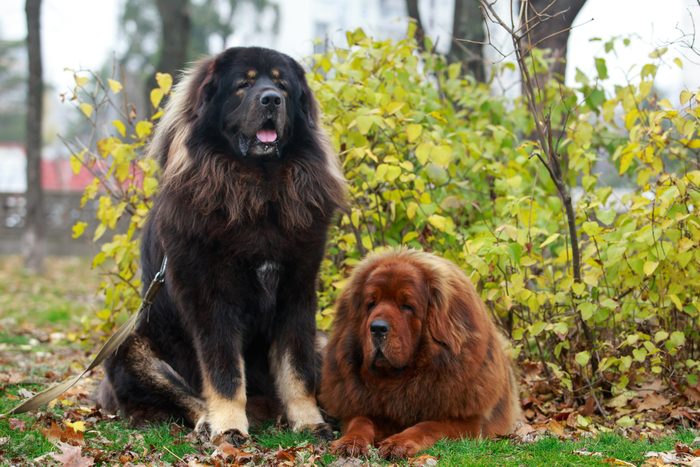
Are you inviting a lion or a dog to share your home? It’s hard to tell with the Tibetan mastiff’s formidable size and mane of thick, dense fur. As a member of the working group, it veers on the side of being a large-and-in-charge guardian and independent thinker. It has a strong sense of self and confidently assumes it is an equal, not a pet. Yet the Tibetan mastiff is also mellow and very affectionate with its human family, dependent on their companionship to be happy and to avoid mischief. If these dogs are apart from you and alone for too long, they’ll find ways to entertain themselves that aren’t constructive. (Read: Huge dog, huge mess.)
| Breed overview | |
| Height: | 24 to 26 inches at the shoulder |
| Weight: | 70 to 150 pounds |
| Life expectancy: | 10 to 12 years |
Things to know before adopting a large dog breed
You’ve probably already thought about whether you have enough space for a huge dog, but there are a few more details to consider before adopting one of these large dog breeds. For starters, giant dogs wolf down a lot of food. “A dog who weighs 100 pounds eats almost five cups a day of commercial dog kibble; then add about one-third cup more for every 10 pounds over 100 pounds,” says Lyndsey Larson, VMD, ABVP, a veterinarian at VCA Firehouse Animal Hospital in Denver.
Because of their size, the biggest dog breeds also require more medicine, including flea and tick preventatives. And big dogs make bigger messes with their fur, slobber and paws. All in all, you may need a bigger car, bigger poop bags or scoops, bigger crates, bigger dog beds and bigger muscles to deal with your extra-large pet. These are just a few weighty factors to consider when thinking about how much it will cost to own a dog of this size.
The largest dog breeds’ puppy stage
Smaller dogs generally reach their full size at around 12 months. The largest dog breeds take their time reaching their adult weight, hitting maturity between 18 and 24 months old.
Behavior and training challenges are magnified when you have a huge dog, so training during the impressionable puppy stage is essential. “A good rule of thumb is to get a large-breed pet into a training program and support those good habits at home between the ages of 16 weeks and one year,” says Dr. Larson.
The largest dog breeds’ life span
Although the reasons aren’t entirely clear, most giant dog breeds have shorter life spans. They age more quickly, thus developing age-related diseases, such as osteoarthritis, earlier. This can make it difficult for them to get around or climb stairs. You may eventually need a ramp or a special lifting harness to help them up and down stairs or into a car. And with big dogs, knowing how to pick up a dog safely without hurting them or yourself is vital.
Why trust us
At Reader’s Digest, we’re committed to producing high-quality content by writers with expertise and experience in their field in consultation with relevant, qualified experts. For this piece on large dog breeds, Lisa Marie Conklin tapped her experience as a reporter who has covered dogs and pets for seven years, and then Caroline Coile, PhD, an award-winning journalist specializing in canine breeds, health and science, gave it a rigorous review to ensure that all information is accurate and offers the best possible advice to readers. For this piece, we relied on reputable primary sources and experts, including practicing veterinarians. We verified all facts and data and backed them with credible sourcing, and we will revisit them over time to ensure they remain accurate and up to date. Read more about our team, our contributors and our editorial policies.
Sources:
- Jerold Bell, DVM, veterinarian, adjunct professor of clinical genetics at Tufts University’s Cummings School of Veterinary Medicine and lead author of Veterinary Medical Guide to Dog and Cat Breeds; email interview, Jan. 18, 2024
- Sara Ochoa, DVM, veterinarian at the Animal Hospital of West Monroe in Louisiana and senior writer for HoundGames; email interview, Jan. 23, 2024
- Lyndsey Larson, VMD, ABVP, veterinarian at the VCA Firehouse Animal Hospital in Denver; email interview, July 13, 2021
- American Film Institute, “Beethoven’s 2nd”
link



More Stories
Most Popular Dog Breeds of the 1930s
Westminster Fun Facts You May Not Know
15 Fun Facts About Westminster’s Winningest Breeds